Bug Out Bag Checklist for Beginners (2026): Everything You Need to Survive 72 Hours
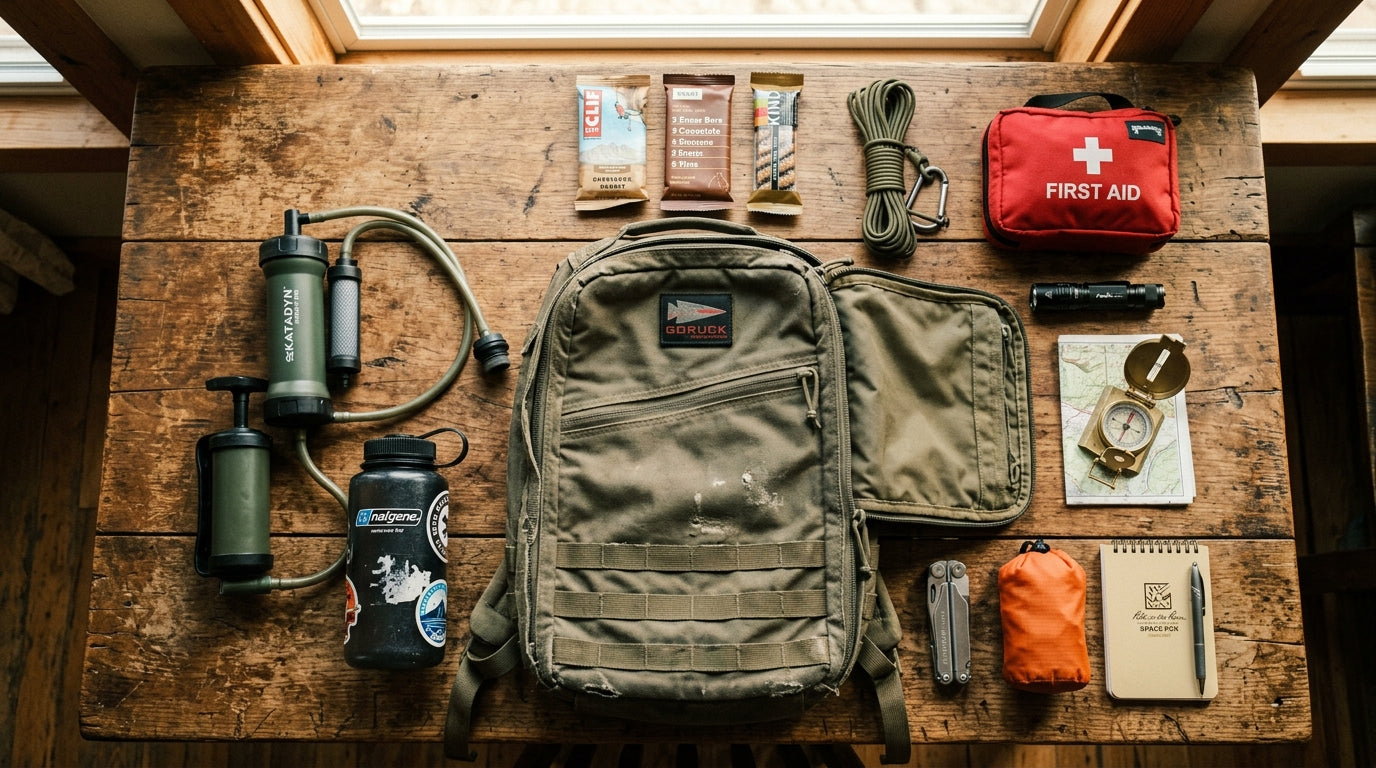
Bug Out Bag Checklist for Beginners (2026): Everything You Need to Survive 72 Hours
Most people don't think about their bug out bag until they need one. By then, it's too late to build it right. Whether you're preparing for a natural disaster, a power grid failure, a wildfire evacuation, or civil unrest — a well-packed bag means the difference between scrambling and executing.
This checklist covers everything a beginner needs to know: what a bug out bag actually is, what goes inside it, how to organize it, and how to avoid the most common mistakes new preppers make. If you'd rather skip the build and get a fully loaded 72-hour bug out bag shipped to your door, we've got that covered too.
What Is a Bug Out Bag?
A bug out bag (BOB) — also called a go bag, get home bag, or 72-hour kit — is a pre-packed backpack containing everything you need to survive for at least 72 hours after an emergency forces you to leave home. The "72 hours" benchmark comes from FEMA's guidance that most rescue and recovery operations mobilize within three days. Your job is to stay alive and mobile until help arrives or you reach safety.
The key word is pre-packed. If you're grabbing things off shelves when the alert hits, you've already failed the first test. A real bug out bag lives in your closet, your car, or by your front door — ready to grab in under a minute.
The Bug Out Bag Checklist: 7 Essential Categories
Every bug out bag, regardless of size or budget, should cover these seven categories. Think of each one as a layer of your survival system.
1. Water & Hydration
Water is your highest priority. The human body can go three weeks without food but only three days without water — and that window shrinks fast under stress and physical exertion.
- At least 1 liter of water per person (enough to get moving)
- Water filtration — a LifeStraw, Sawyer squeeze filter, or iodine tablets
- Collapsible water bottle or hydration bladder
- Stainless steel container (doubles as a pot for boiling)
Beginner tip: Don't rely on stored water alone. A filter lets you refill anywhere.
2. Food & Nutrition
You need calories to move, think, and stay calm. This is not a comfort category — it's fuel.
- High-calorie, shelf-stable food (energy bars, MREs, freeze-dried meals)
- 72-hour food supply minimum — roughly 1,200–2,000 calories per day per person
- No-cook options for situations where fire isn't safe or possible
- Small camp stove and fuel tabs if space allows
Our Deluxe and Elite bug out bag variants include a 72-hour food supply pre-packed — one less thing to figure out.
3. Shelter & Warmth
Exposure kills faster than almost anything else. Even in mild climates, a cold rainy night without shelter can cause hypothermia within hours.
- Emergency mylar space blanket (compact, lightweight, essential)
- Lightweight tarp or emergency bivy
- Paracord (100 ft minimum) for rigging shelter
- Extra socks and a base layer appropriate to your climate
- Rain poncho
4. First Aid & Trauma
In a real emergency, EMS response times stretch or disappear entirely. You need to be your own first responder.
- Comprehensive first aid kit — bandages, gauze, antiseptic, medical tape
- Tourniquet (CAT or SOFTT-W) — non-negotiable if you're serious
- Trauma shears
- Nitrile gloves
- Any personal prescription medications (7-day supply minimum)
- Pain reliever, antihistamine, anti-diarrheal
Browse our survival and IFAK gear if you want to upgrade your medical loadout.
5. Fire Starting
Fire means warmth, water purification, signaling, and cooked food. Pack at least two ways to start one.
- Waterproof matches in a sealed container
- Lighter (BIC, not a cheap gas station one)
- Ferro rod / fire striker for long-term reliability
- Fire tinder — cotton balls with petroleum jelly work great
6. Light & Navigation
Emergencies don't wait for daylight. And if the grid is down, GPS on your phone isn't reliable.
- Headlamp with extra batteries (headlamps beat handheld flashlights for hands-free use)
- Backup flashlight
- Compass — learn to use it before you need to
- Physical maps of your region and planned evacuation routes
- Glow sticks for signaling or marking
7. Tools & Communication
The right tools multiply your options. Keep this category lean — weight matters when you're moving on foot.
- Fixed-blade or folding knife
- Multi-tool (pliers, screwdriver, bottle opener, saw)
- Duct tape (wrap a small amount around a water bottle to save space)
- Portable hand-crank or battery weather radio
- Whistle for signaling
- Cash in small bills (ATMs and card readers go down in disasters)
- Copies of important documents in a waterproof bag — ID, insurance, emergency contacts
Don't Forget the Bag Itself
All of this gear needs a home. Your bag should:
- Hold 30–50 liters for a solo kit (50–72L for a family-oriented loadout)
- Have a sturdy frame or padded back panel — you may be carrying it for miles
- Feature MOLLE webbing for attaching additional pouches
- Be water-resistant or paired with a rain cover
- Not scream "I have expensive gear" — subdued colors, not bright orange
Common Beginner Mistakes
Overpacking. The number one mistake. A 60-lb bug out bag sounds impressive until you're three miles into an evacuation on foot. Target 15–25 lbs for most adults. Every ounce should earn its place.
Buying gear you haven't tested. Pack it, then wear it on a 3-mile walk. You'll immediately find out what doesn't fit, chafes, or is useless. Do this before the emergency, not during it.
Forgetting water purification. A 3-liter water supply gets you through one day. A filter gets you through weeks. Don't skip this.
No evacuation plan. A bag without a destination is a backpack. Decide where you're going, pre-drive the route, and have a backup. Tell someone who isn't evacuating with you.
Never rotating supplies. Food and batteries expire. Set a calendar reminder every 6 months to audit your kit.
Should You Build It or Buy Pre-Built?
Building your own bag gives you total control over quality and fit, but it takes time, research, and multiple orders. A pre-built kit is faster and often more cost-effective than buying each component individually — especially if you're getting started and don't have existing gear.
Our Complete 72-Hour Bug Out Bag comes in five variants — from the solo-optimized Lone Wolf to the full-loadout Elite — and ships in 2–4 days. Every item was selected for real emergency use, not for looks.
Whether you build or buy, the most important thing is this: do it today. Not next weekend. Today.
Frequently Asked Questions
How heavy should a bug out bag be?
For most adults, aim for 15–25 lbs. A good rule of thumb is no more than 20% of your body weight. You may need to carry it for miles, possibly under stress, possibly with kids in tow.
How long should a bug out bag last?
The standard is 72 hours (3 days). Some preppers pack for 7 days, but 72 hours covers most real-world evacuation scenarios and keeps weight manageable.
Where should I store my bug out bag?
Store it somewhere you can access in under 60 seconds. Most people keep one at home near the front door or in a bedroom closet, and a lighter version in their car.
Do I need a bug out bag if I live in a city?
Especially if you live in a city. Urban disasters — power grid failures, civil unrest, flooding, building fires — create situations where you need to move fast with everything you need on your back.