Bug Out Bag vs. Get Home Bag: What's the Difference and Which One Do You Need?
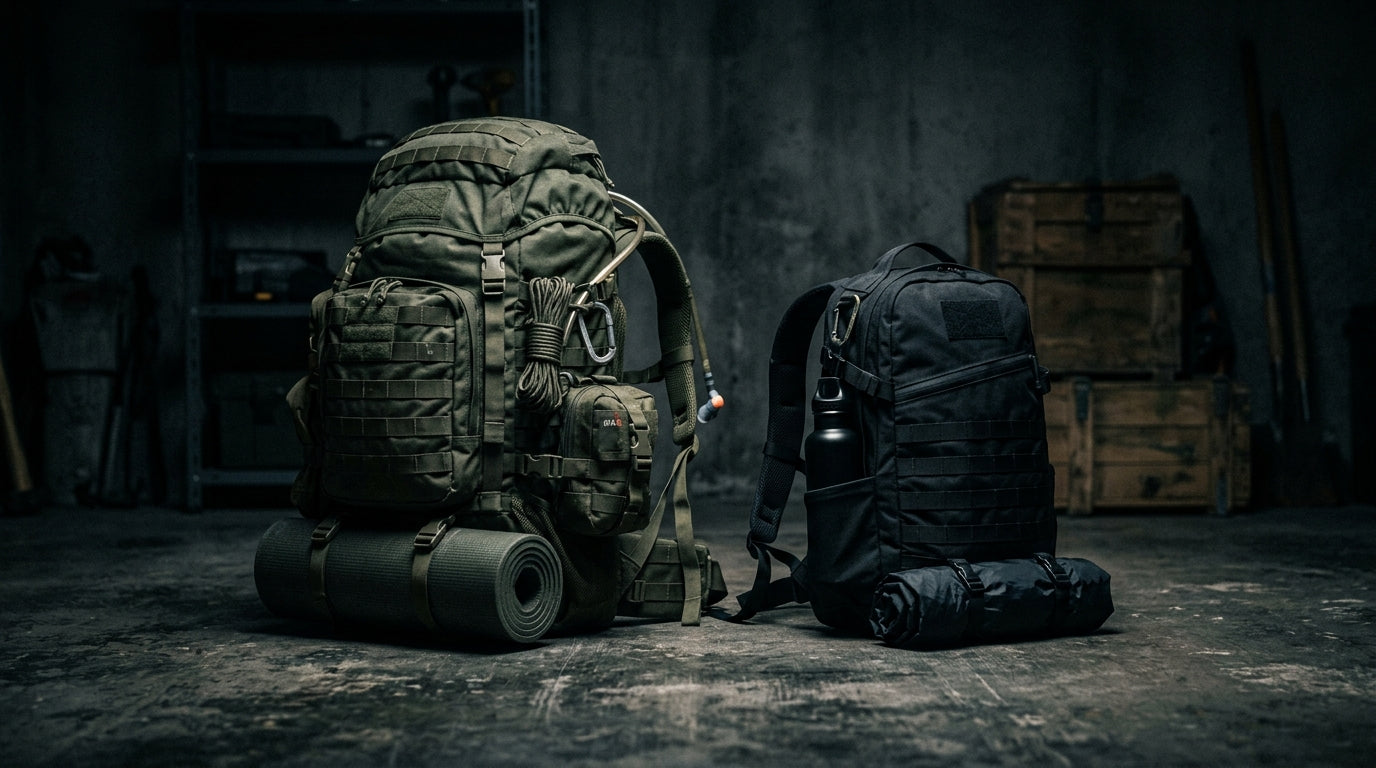
Bug Out Bag vs. Get Home Bag: What's the Difference and Which One Do You Need?
If you've spent more than five minutes in prepper circles, you've heard both terms: bug out bag (BOB) and get home bag (GHB). They sound similar. They serve completely different missions. Confusing them — or worse, building one and thinking you've covered both — is a mistake that could cost you in an actual emergency.
This breakdown explains exactly what each bag is for, what goes inside each one, and how to decide which to build first based on your personal situation.
The Core Difference: Direction of Travel
Here's the simplest way to understand it:
- A bug out bag is built to take you away from home — toward a safe location, a secondary shelter, or a bug-out destination. You grab it when staying home is no longer safe.
- A get home bag is built to get you back to home — from work, from your car, from wherever you are when things go wrong. It lives in your office, your vehicle, or your desk.
Same general idea — emergency preparedness gear in a bag — but pointing in opposite directions and sized for completely different scenarios.
What Is a Bug Out Bag?
A bug out bag is your 72-hour emergency survival kit. It's built for a worst-case scenario where your home is no longer safe or accessible — wildfires, flooding, structural failure, civil unrest, grid-down situations — and you need to move quickly with everything you need to survive independently for at least three days.
Bug out bags are comprehensive. They cover water, food, shelter, fire, first aid, navigation, communication, and tools. They're packed for an unknown destination under unknown conditions. A well-built BOB typically weighs 20–30 lbs and lives at home, near your exit point.
Our Complete 72-Hour Bug Out Bag is built around exactly this mission — fully loaded, tested, and ready to grab.
What Is a Get Home Bag?
A get home bag is leaner, lighter, and built around one specific mission: getting you from Point A (wherever you are) back to your home, your family, and your main supplies. It assumes you have a destination and a general route. It's not trying to sustain you for three days in the wilderness — it's trying to keep you functional and moving for 12–24 hours, possibly on foot, through an urban or suburban environment.
A GHB typically lives in your vehicle or at your workplace. It weighs 10–15 lbs. It's designed to be inconspicuous — not a full tactical kit, but not useless either.
Side-by-Side Comparison
| Feature | Bug Out Bag (BOB) | Get Home Bag (GHB) |
|---|---|---|
| Purpose | Evacuate away from home | Return to home from elsewhere |
| Duration | 72 hours (3 days) | 12–24 hours |
| Typical weight | 20–30 lbs | 10–15 lbs |
| Where it lives | Home (near exit) | Car, office, or workplace |
| Food supply | Full 72-hour caloric supply | Light snacks, energy bars |
| Water | Filter + stored supply | 1–2 liters + filter or tabs |
| Shelter | Emergency bivy, tarp, paracord | Space blanket only |
| Navigation | Compass + regional maps | Pre-memorized route + city map |
| Destination | Pre-planned bug-out location | Home |
What Goes in a Get Home Bag?
Because a GHB is built for a shorter, more defined mission, you can go lighter. Here's the core loadout:
Water
- 1–2 liters of water
- Water purification tablets or a compact filter
Food
- 2,000 calories of energy-dense snacks — bars, jerky, trail mix
- No cooking required
Navigation
- Printed map of your city or region
- Compass
- Know at least two routes home on foot before you need them
First Aid
- Compact first aid kit — blister care, bandages, pain reliever
- Trauma shears
- Any critical personal medication
Light & Tools
- Small flashlight or headlamp
- Multi-tool
- Gloves (work gloves for debris, not just cold weather)
- Dust mask or N95 (especially relevant post-COVID or in areas prone to wildfire smoke)
Comfort & Morale
- Extra socks (blisters end walks)
- Cash in small bills
- Phone charger / battery bank
- Rain poncho
Which One Should You Build First?
It depends entirely on your lifestyle and risk profile.
Build a Get Home Bag first if:
- You commute more than 15 miles from home
- You spend 8+ hours per day away from your house
- You work in a dense urban environment
- You've never thought about how you'd get home if your car was unusable
Build a Bug Out Bag first if:
- You live in a high-risk zone — wildfire corridor, flood plain, coastal hurricane zone
- You work from home or rarely travel far
- You already have a get home routine but no plan for leaving your area fast
The real answer for most households? You need both. They're complementary, not competing. Most serious preppers build a GHB that lives in the car, and a full BOB at home. The GHB gets you back to your BOB. The BOB takes it from there.
The Bottom Line
A bug out bag and a get home bag are two tools solving two different problems. Get them confused and you'll either be carrying too much for a day-trip scenario or not enough for a 72-hour emergency evacuation.
Start with the one that fits your biggest gap. If you want to skip the build process for your BOB, browse our pre-built bug out bags and survival kits — every variant is fully loaded and ships in 2–4 days.
Frequently Asked Questions
Can a bug out bag double as a get home bag?
Technically yes, but it's not ideal. A full BOB is heavier than you want for a daily commuter carry. A dedicated GHB in your vehicle is lighter, more practical, and always accessible. If you can only have one, a BOB covers more ground — but the weight tradeoff is real.
How far should I expect to walk with a get home bag?
Plan for up to 25 miles on foot. Most commuters live within this range of work. If you're farther than that, build in intermediate rest/resupply points on your route and carry more water.
Should my get home bag look tactical?
Probably not. In an urban emergency, a full tactical kit draws attention and can make you a target. A standard daypack or a nondescript backpack is better for most GHB scenarios. Save the MOLLE gear for your bug out bag at home.
What size backpack do I need for a get home bag?
A 20–30L daypack is plenty for a GHB. You want enough room for your essentials without encouraging overpacking.