Grid-Down Survival: How to Prepare for an Extended Power Outage
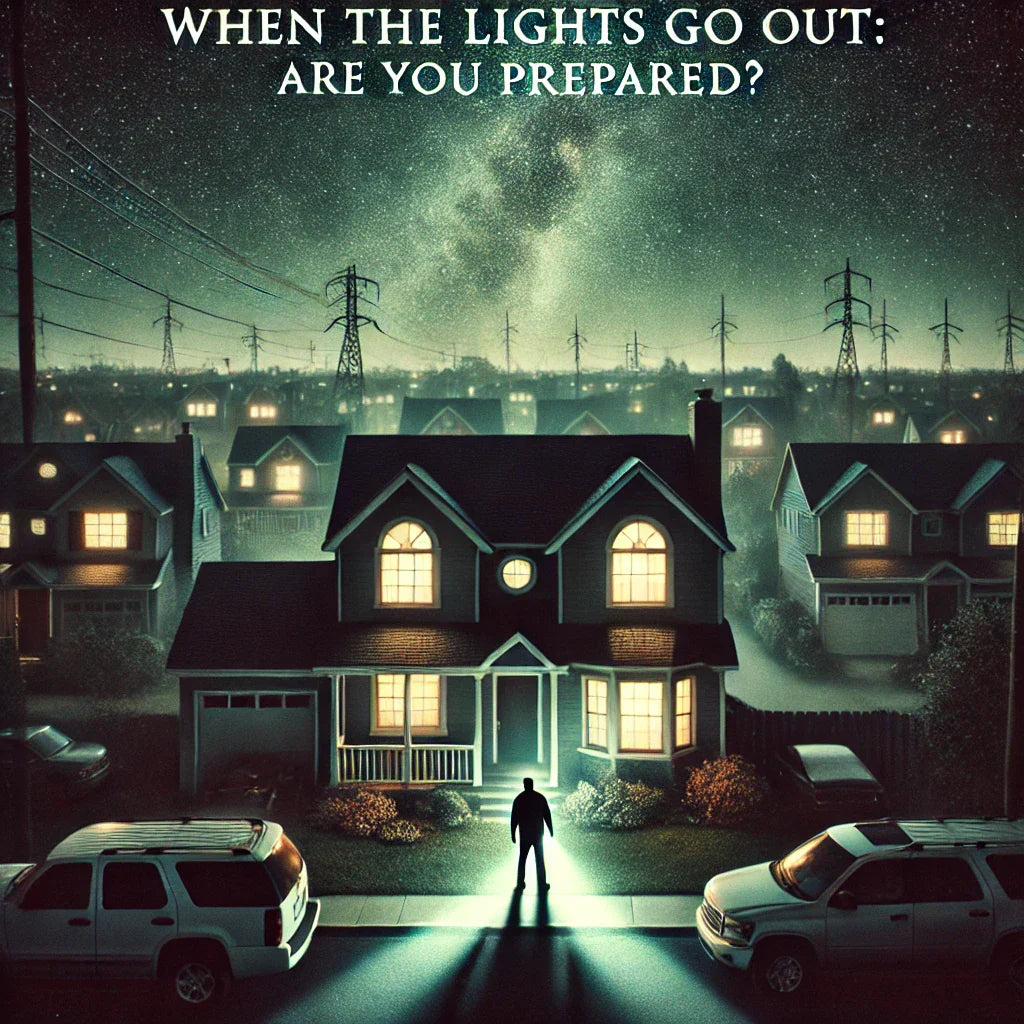
A grid-down crisis is an extended, widespread loss of electricity, from severe weather, equipment failure, or an attack on utility infrastructure, that can knock out power, water treatment, fuel pumps, and communications for days or longer. Surviving one comes down to three things: stored water, a stocked emergency kit, and a plan your household has actually practiced. FEMA and Ready.gov guidance recommends being able to sustain your household for at least 72 hours without outside help.
What Counts as a Grid-Down Event?
A grid-down event is different from the average blackout. A storm knocks out a few blocks for an evening, that's routine. A grid-down crisis is regional or wider, and the outage stretches from days into weeks. Common causes include:
- Severe weather: hurricanes, ice storms, and high-wind events that damage transmission lines and substations.
- Equipment or infrastructure failure: aging grid components, overloaded systems during extreme heat or cold.
- Cyberattacks or physical attacks on utility infrastructure: a growing concern for grid operators and emergency planners.
- Natural disasters: earthquakes, flooding, and wildfires that damage power infrastructure directly.
The cause matters less than the outcome: no power means no water pressure in many systems, no gas station pumps, no refrigeration, and spotty or dead communications. Preparedness for a grid-down crisis is really preparedness for all of those downstream effects at once.
How Long Should You Be Prepared to Last Without Power?
Start with 72 hours. That's the baseline FEMA and Ready.gov recommend for any household emergency plan, and it's long enough to cover the vast majority of outages, storms, and short-term disruptions. If you want a deeper answer on what that kit should actually contain, see our guide on what a 72-hour kit is and why it matters. From there, many preppers build toward a longer runway, but 72 hours is the floor, not the ceiling.
Water Comes First
You can go weeks without food but only days without water, which is why water is the first priority in any extended outage. A commonly cited guideline is about one gallon of water per person, per day, for drinking and basic hygiene. If you have advance warning of a storm or grid strain, fill sinks, bathtubs, and any clean containers you have on hand, since municipal water systems can lose pressure or fail entirely without power. Pair stored water with a way to purify more, whether that's a filter, purification tablets, or a way to boil water safely.
Build a Kit Before You Need One
An emergency kit is only useful if it's already assembled when the power goes out, not something you're piecing together in the dark. At minimum, a solid grid-down kit includes:
- A flashlight and extra batteries, or a hand-crank/solar option
- Stored water and a purification method
- Shelf-stable or freeze-dried food
- A first-aid kit
- A multi-tool
- A way to start a fire and cook safely (outdoors or well-ventilated)
- A portable charger or solar charger for phones and radios
If you'd rather start from a complete, pre-packed option, our Complete 72 Hour Fully Loaded Bug Out Bag covers these categories in one kit, or browse the full bug out gear collection to build your own. Whichever route you take, the deciding factor isn't how much gear you own, it's whether you know how to use it. Practice with your gear before a crisis, not during one.
Staying Safe and Low-Key During an Extended Outage
Widely-cited preparedness advice recommends keeping a low profile during an extended crisis rather than drawing attention to the resources you have on hand. That means being thoughtful about visible cooking fires or generator noise, avoiding large crowds when there's no clear source of aid or information, and being cautious about sharing details of your supplies outside your trusted circle. None of this requires paranoia, just the same situational awareness you'd use in any unfamiliar or unstable situation.
Community Matters as Much as Supplies
Self-reliance is the foundation of preparedness, but it isn't the whole picture. Knowing which neighbors are prepared, who might need help, and who you can trust in a crisis adds a layer of security that supplies alone can't provide. Building those relationships before an emergency, not during one, is one of the most consistently overlooked parts of a solid preparedness plan.
Check and Rotate Your Supplies
A kit that's been sitting untouched for years can fail you when you need it most. Check and rotate food, water, batteries, and medical supplies periodically, a common rule of thumb is twice a year, so everything in your kit is still usable when the lights actually go out.
Frequently Asked Questions
What is a grid-down crisis?
A grid-down crisis is an extended, widespread loss of electricity, caused by events like severe weather, equipment failure, or attacks on utility infrastructure. Unlike a routine outage that clears in a few hours, a grid-down event can leave a region without power, water treatment, fuel pumps, and communications for days or longer.
How long should I be prepared to survive without power?
FEMA and Ready.gov guidance recommends every household be able to sustain itself for at least 72 hours without outside help. Many preppers treat 72 hours as a minimum baseline and build toward a longer supply from there.
What's the most important supply to have during a power outage?
Water is generally considered the top priority, since a household can go far longer without food than without safe drinking water. A common guideline is about one gallon of water per person, per day, for drinking and basic hygiene.
Should I bug out or shelter in place during a grid-down event?
It depends on your home's safety, local conditions, and how long the outage is expected to last. Many preparedness plans favor sheltering in place when the home is safe and stocked, since travel during a crisis can carry its own risks. Having a 72-hour kit ready either way keeps both options open.