Nuclear Attack Preparedness: What the First Week Actually Looks Like
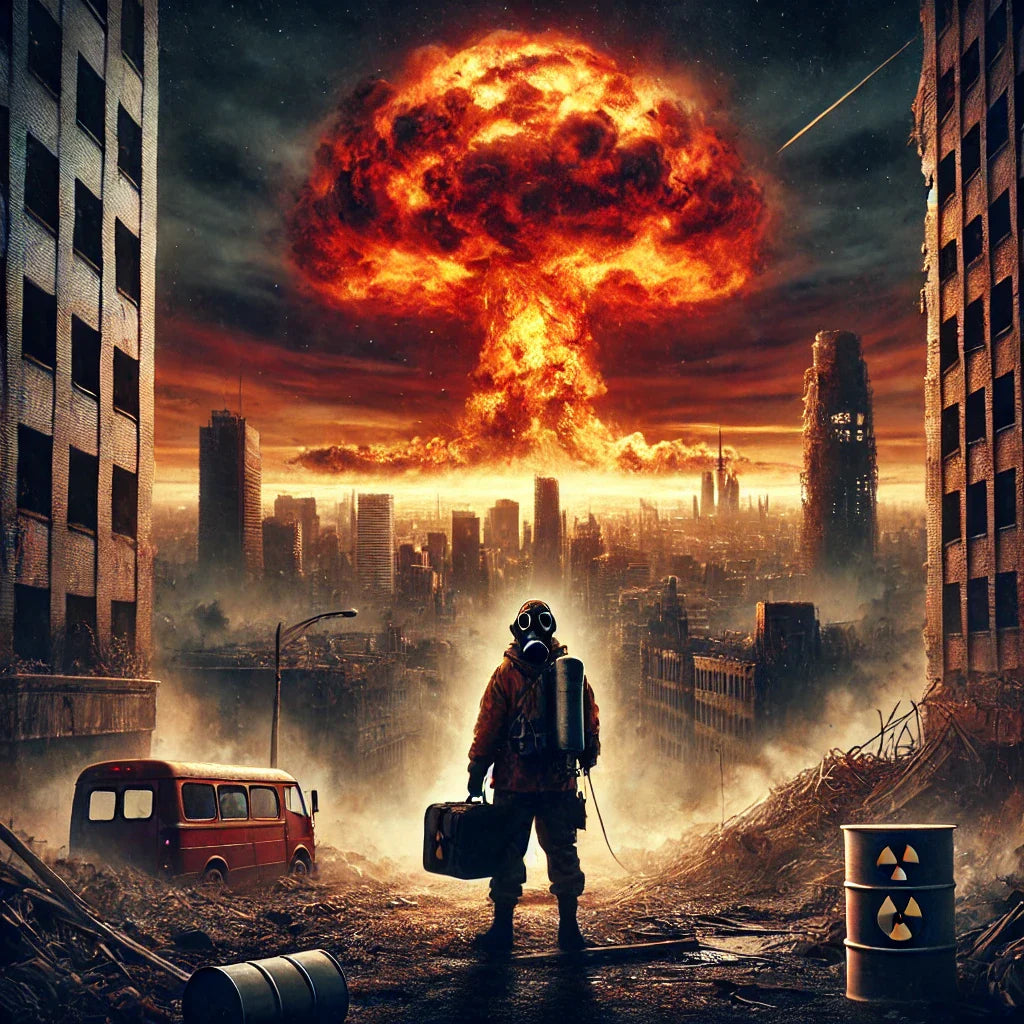
A nuclear attack unfolds in stages: an initial blast, a period of dangerous radioactive fallout, and then days of managing without power, clean water, or outside help. The first 24 to 48 hours after detonation are the most dangerous window, and how prepared your household is beforehand largely determines how the rest of the week goes.
What Happens in the First Minutes After a Nuclear Detonation
A nuclear explosion produces an intensely bright flash followed by a shockwave that can arrive within seconds. There is no time to plan in the moment, only to react.
- Drop and cover immediately, shielding your face and body from the blast and flying debris.
- Get inside the nearest sturdy building if you're outdoors, ideally a structure with concrete or masonry walls, and move away from windows.
- Stay down and stay low until the initial shockwave and debris have settled. Many injuries in the minutes after a blast come from collapsing structures and secondary debris, not the blast itself.
Surviving the initial blast is only the first step. The more prolonged danger, radioactive fallout, begins immediately after.
The First 24 to 48 Hours: Sheltering From Radioactive Fallout
A nuclear explosion throws radioactive particles into the air, which settle back to the ground as fallout. General civil defense guidance is consistent on this point: get inside, stay inside, and stay tuned. Fallout radiation is most hazardous in the hours immediately following detonation and gradually decreases over time.
- Get inside and stay there. A basement or the most interior, below-ground room of a sturdy building offers the most protection.
- Put distance between yourself and windows and exterior doors, where fallout particles and radiation can penetrate most easily.
- Seal what you can, using plastic sheeting and tape on obvious gaps, vents, and openings to limit airborne contamination.
- Avoid going back outside until official sources confirm it's safe. A battery or hand-crank radio is the most reliable way to monitor emergency broadcasts if power and cell service are down.
Official guidance generally calls for sheltering in place for at least 24 hours before considering any movement, and longer if authorities haven't given an all-clear.
Days 2 to 5: Getting Through a Supply Crisis
Once the immediate fallout danger starts to ease, the practical challenges take over. Power, water systems, and supply chains are likely to be disrupted for an extended stretch, and stores, hospitals, and emergency services will be stretched thin or unreachable.
- Grocery stores and pharmacies may be closed, picked over, or inaccessible.
- Medical care may be delayed or unavailable for anything short of an emergency.
- Municipal water and power may be out for days, which is why having your own stored water and a way to purify more matters.
This is the stretch where advance preparation, not last-minute scrambling, makes the difference. Households that already have food, water, and basic medical supplies on hand are far better positioned than those trying to source them after the fact.
Days 5 to 7: Rationing and Staying Informed
By the back half of the first week, survival is mostly a matter of resource management and situational awareness.
- Ration food and water deliberately rather than depleting supplies early.
- Keep monitoring emergency broadcasts for updates on evacuation routes, water safety, or when it's safe to resume normal movement.
- Limit outside exposure until local authorities confirm radiation levels have dropped to safe levels.
Every day that a household has to stretch limited supplies without a plan is a day where decisions get harder and riskier.
How to Prepare Before a Nuclear Emergency Happens
You won't get a warning before a nuclear detonation, which means preparation has to happen well in advance. FEMA and Ready.gov guidance recommends every household be able to sustain itself for at least 72 hours without outside help, with about one gallon of water per person, per day, as a baseline. A nuclear scenario can easily stretch beyond that window, so building in a margin is worth it.
A packed, ready-to-grab bug out bag does double duty here. Since the first priority after a nuclear event is sheltering in place rather than evacuating, that same bag functions as an at-home emergency kit, and it's ready to go if evacuation does become necessary once it's safe to move. Our bug out bag checklist walks through exactly what to pack, and the Complete 72 Hour Fully Loaded Bug Out Bag is built to cover those essentials out of the box.
Frequently Asked Questions
How long should you shelter in place after a nuclear explosion?
General civil defense guidance recommends getting inside a sturdy building immediately and staying there for at least 24 hours, since fallout radiation is most dangerous in the hours right after detonation and decreases over time. Wait for an official all-clear from emergency broadcasts before leaving shelter.
What is nuclear fallout and why is it dangerous?
Fallout is radioactive particles thrown into the atmosphere by a nuclear explosion that then settle back to the ground, contaminating surfaces and creating a radiation exposure risk. It's most hazardous in the period immediately after detonation, which is why staying indoors, away from windows and outside air, is critical.
What supplies do you need to get through the first week after a disaster like this?
At minimum, plan on water (about one gallon per person, per day), non-perishable food, basic medical supplies, and a battery or hand-crank radio, enough to sustain your household for at least 72 hours per FEMA/Ready.gov guidance, with more being safer for an extended event.
Is a bug out bag actually useful for a nuclear event?
Yes. Since the first priority after a nuclear detonation is sheltering in place rather than evacuating right away, a packed bug out bag doubles as an at-home emergency kit, keeping food, water, first aid, and communication tools within reach if you need to shelter for days or move once it's safe to do so.