Compact Cooking Tools for Emergency Meal Prep
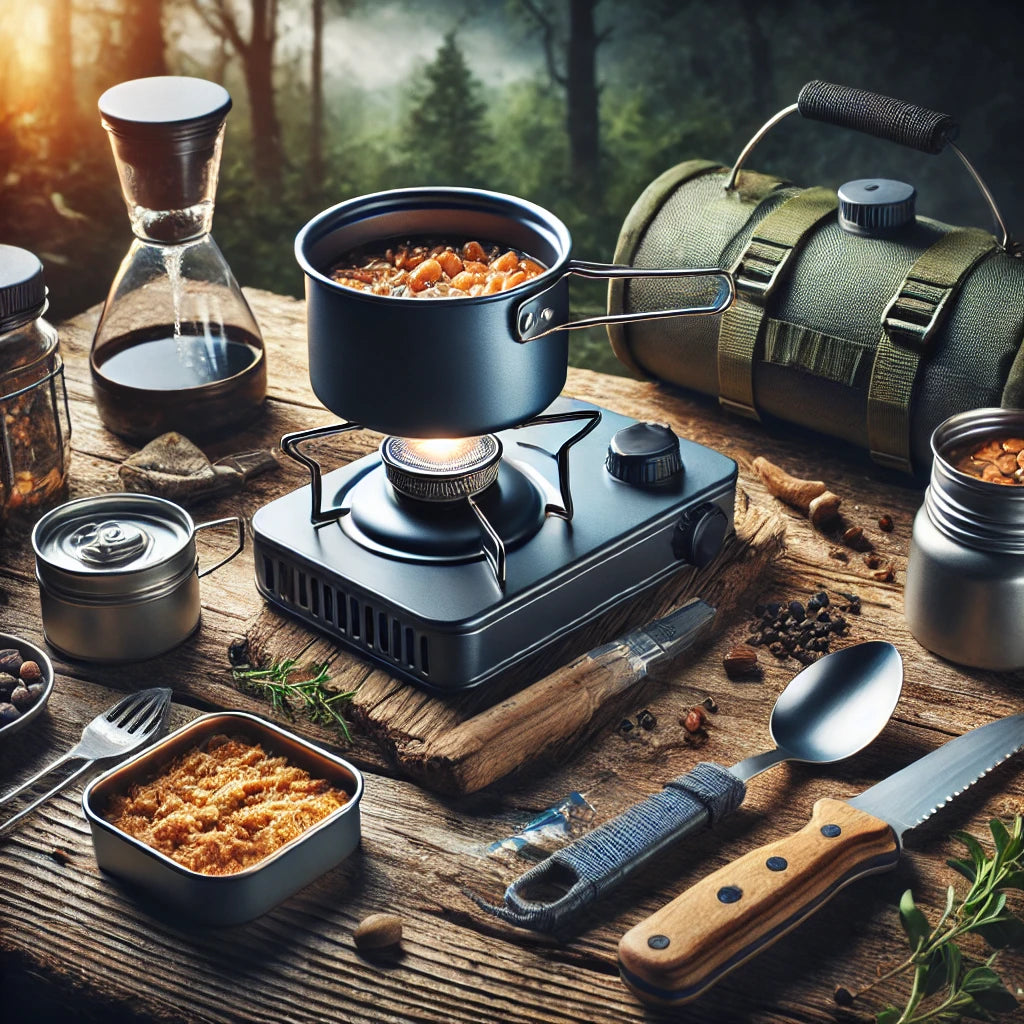
The core of any emergency cooking kit is a portable stove with compatible fuel, lightweight nesting cookware, and food that only requires boiling water to prepare. Add a compact water kettle and a backup fire-starting method, and you can produce hot, calorie-dense meals with no electricity and minimal gear.
Preparedness guidance from FEMA and Ready.gov calls for households to be able to sustain themselves for at least 72 hours without outside help. Food is only half of that equation. Without a way to heat water or cook, even a well-stocked pantry of freeze-dried meals is hard to use. Here's what actually matters when you're building out compact cooking gear for a bug out bag or home emergency kit.
Portable Stoves: The Core of Any Emergency Cooking Setup
A portable stove is one of the most useful pieces of emergency cooking gear. Most compact models run on propane, butane, or alternative fuels, and they let you boil water or cook a hot meal in minutes without relying on a fire pit or grid power.
What to Look For in a Portable Stove
- Lightweight and easy to pack in a bag or vehicle kit.
- Adjustable heat settings for different cooking needs.
- Compatible with standard, widely available fuel canisters.
Pro tip: Store extra fuel canisters alongside the stove and practice lighting and operating it before you actually need it. A stove you've never used is a liability in an emergency.
Fuel and Fire-Starting Backups
A stove is only as useful as the fuel behind it. Keep more than one way to generate heat.
- Propane or butane canisters sized for your stove.
- Long-lasting solid fuel tablets as a lightweight backup.
- A fire-starting kit with waterproof matches or a ferro rod for open-fire cooking.
Pro tip: Store fuel in a cool, dry place and check expiration dates when you do your regular gear check (many preppers do this twice a year).
Lightweight Cookware and Multi-Use Utensils
Compact cookware sets built for emergency or backcountry use are typically aluminum or stainless steel, and the good ones are designed to nest inside each other so they take up minimal space.
What to Look For in Cookware
- Stackable or nesting design for compact storage.
- Multi-functional pieces, like a pot lid that doubles as a bowl or pan.
- A tight-fitting lid, which speeds up cooking time and conserves fuel.
Pair cookware with a few multi-use utensils instead of a full kitchen drawer: a sturdy knife for food prep, a collapsible spork, and a combination bottle and can opener cover most situations. Stainless steel holds up better than plastic over repeated use.
Boiling Water for Coffee, Tea, and Rehydrated Meals
A collapsible water kettle solves a specific problem: getting water hot fast without hauling a full-size kettle. Look for food-grade silicone or lightweight metal construction, a heat-resistant handle, and a compact folding design. Paired with a portable stove, it's a fast, low-fuel way to prepare hot drinks or rehydrate a meal pouch.
Food That Requires Minimal Cooking
Freeze-dried meal packs are the standard choice for emergency food because they're lightweight, shelf-stable, and only require hot water to prepare, no stovetop cooking skills needed.
What to Look For in Emergency Meals
- A high calorie-to-weight ratio, so you're not carrying more weight than the calories justify.
- Variety packs to avoid menu fatigue during an extended situation.
- Single-serving pouches for easier portion control and less waste.
Off-Grid Cooking Options: Hand-Crank and Solar Tools
In a grid-down situation, appliances that don't depend on batteries or outlets become genuinely useful. A hand-crank blender can mix ingredients or prepare baby food without power, and a solar oven can cook using sunlight alone. Solar-powered lights can also make cooking after dark safer and easier. Test any of these tools before an emergency so you're not learning how they work under pressure.
Storing and Organizing Your Cooking Gear
Compact gear only stays compact if it's organized. Keep cooking tools and utensils in their own labeled bag or box, use stackable containers to save space, and separate cooking gear from other kit items so you can grab it quickly. If you're building or refreshing a full kit, our 72-hour bug out bag checklist covers what else belongs alongside your cooking setup.
Building the Rest of Your Kit
Compact cooking tools are one piece of a larger preparedness plan. If you're starting from scratch, the Complete 72 Hour Fully Loaded Bug Out Bag bundles core 72-hour essentials in one pack, and our full Bug Out Gear collection covers stoves, cookware, and other survival gear individually if you'd rather build your kit piece by piece.
Frequently Asked Questions
What's the most important piece of emergency cooking gear?
A portable stove with compatible fuel. It's the one tool that lets you reliably heat water or cook food regardless of whether you have power, a fire pit, or a kitchen available.
Do I still need a stove if I'm carrying freeze-dried meals?
Yes. Most freeze-dried meals are designed to rehydrate with hot water, so you need a way to boil water, whether that's a stove and kettle or another heat source, before you can eat them.
What should I do if the power is out and I have no fuel?
Fall back on non-electric options: a fire-starting kit for open-fire cooking, or hand-crank and solar-powered tools that don't depend on batteries or an outlet.
How often should I check my emergency cooking supplies?
Check and rotate fuel, food, and gear periodically, twice a year is a common schedule, so you catch expired fuel or food before you actually need to use it.